
From plastic waste to a picnic blanket—and much more!
In addition to the bottle caps we have collected, we also upcycle the collected sachets from Ghana. Sachets are small plastic bags filled with water, juices, or milk. They are popular because they are cheaper than drinks in plastic bottles. Unfortunately, after use by the local population in Ghana, they are often carelessly discarded.
But at our Buy Food with Plastic Community Events in Ghana, they get a second chance – and a new purpose. Here, people exchange 30 used sachets - or 20 plastic bottles - for a hot meal. This makes the environment cleaner, while also providing them with something to eat. But our environmental project does not end there. For us, sustainability means creating a cycle in which plastic can continuously circulate through reuse. And so, with us, the sachets undergo a transformation into an environmentally friendly and innovative reuse of plastic.

They do not go through our recycling plant in Ghana. They are made of a different type of plastic, which is why they cannot be turned into surfboard / ice scraper combs.
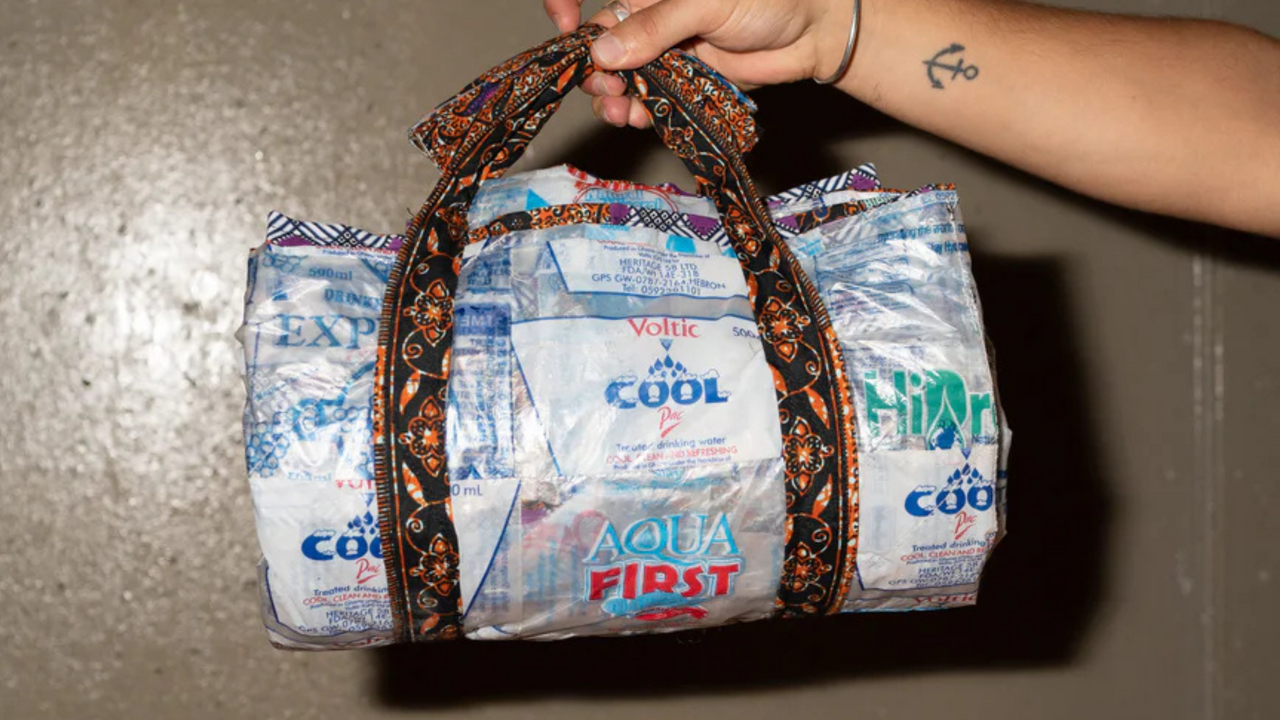
However, our team in Ghana solved the problem very creatively. Many Ghanaians are tailors by profession, which led them to a brilliant idea: The individual sachets could be sewn together into a patchwork blanket and used as a base for picnic blankets.
And so begins the transformation of many small plastic bags into a picnic blanket: The collected sachets are cleaned, dried, and sorted. For an outdoor blanket, we carefully sew 660 of these small bags together to create a durable, water-repellent surface. But plastic alone does not make a picnic blanket.
That is why we combine the recycled sachets with beautiful cotton fabrics that we obtain from the fabric scraps of local seamstresses. These fabrics, known as "Kente" or "Ankara", carry the colors and patterns of Ghana and tell stories of tradition and craftsmanship. The result is a unique outdoor blanket made entirely from recycled materials. Each unique piece has its own character, inspired by the traditional fabrics and the patchwork of sachets. It is robust, easy to care for, and water-repellent – perfect for anyone who appreciates nature and sustainability.

Our blanket therefore bears the name Abibiman, which means "sustainable earth" in the Ghanaian language Fanti. A fitting name for a product that shows how waste can become something valuable.
The price of 135 Swiss francs for something that was once waste may at first glance seem exorbitant, which is why we explain how this price is calculated. 35 CHF covers the production costs, which mainly include the seamstress's wages. Shipping from Ghana to Switzerland costs us 22 CHF, with an additional 5 CHF per blanket for customs costs, including VAT. Another 2 CHF is charged for 2 meals, and 40 CHF pays for the collection of the 660 sachets. The remaining 30 CHF from the 135 CHF goes towards expanding our recycling infrastructure. As you can see, this creates local jobs with every blanket sold. The production provides a source of income for many people in Ghana. The blanket also enables the reuse of fabric scraps and plasticsachets, giving these resources a second life.
Anyone interested in a beautiful, unique picnic blanket can also find it in the shop of our partner, the Zurich Center for Travel Medicine.
But that is not all we can make with the sachets. We have already made cosmetic travel bags, pencil cases, and raincoats, among other things, to showcase some of the possibilities. In the future, we hope to work with more companies to create great new products with the sachets. We are always available for joint collaborations.
Get your Abibimanblanket and support sustainable projects in Ghana.
Leave a comment: